Creative Economy Development Fund (CEDF) 2026: Complete Application Guide, Eligibility Requirements & How to Apply Successfully
Apply for Creative Economy Development Fund (CEDF) 2026. Complete guide on eligibility, required documents, IP-backed financing & application process.
Creative Economy Development Fund (CEDF) 2026: How to Apply Successfully
Introduction
The Federal Ministry of Arts, Culture, Tourism, and Creative Economy (FMACTCE) has launched the Creative Economy Development Fund (CEDF), a transformative initiative approved by the Federal Executive Council (FEC) to revolutionize Nigeria’s creative and cultural industries.
By the end of this article, you will be able to effectively apply for CEDF 2026 funding opportunities.
What is the Creative Economy Development Fund (CEDF)?
The CEDF represents a landmark national investment designed to provide sustainable financing for Nigeria’s creative sector. The fund catalyzes growth and innovation across multiple creative industries including film, music, fashion, art, publishing, gaming, and cultural tourism.
Key Objectives of CEDF
The fund aims to achieve several critical objectives:
Capital Injection for Growth: Providing the capital injection needed for businesses in sectors such as film, music, fashion, art, publishing, gaming, cultural tourism etc., to expand production and reach new markets.
Enhanced Financial Access: Opening up new financing avenues for creative entrepreneurs and organizations, including those who previously lacked access to traditional bank loans or investors.
Job Creation: Empowering creative businesses to scale up operations, leading to the creation of new jobs and livelihoods, especially for youth, while diversifying Nigeria’s economy beyond oil and other traditional sectors.
Intellectual Property Innovation: Establishing a transformative model for securitizing and collateralizing intellectual property, allowing creative talents to leverage their IP, such as film rights, musical works, or digital content—as viable assets to secure financing.
CEDF Application Phases and Timeline
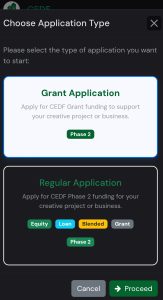
The CEDF operates in two distinct phases to accommodate different funding needs:
Phase 1 (Completed)
Phase 1 Application stage Opened on 28th April and closes on 30 June, 2025. This phase targeted mature creative projects seeking investments above $100,000. Successful applicants from Phase 1 can expect disbursements starting January 2026.
Phase 2 (Current Opportunity)
Phase 2 Application will open on 4th August and will be targeted at SMEs and MSMEs with smaller ticket size investments, specifically projects under $100,000. For Phase Two, disbursements will start on April 1, 2026.
Who is Eligible for CEDF Funding?
The CEDF welcomes a broad spectrum of stakeholders within the creative and cultural ecosystem:
Eligible Sectors
Film & Television Industry
- Producers, directors, writers
- Studios and post-production teams
- Cinema operators
Music & Fashion
- Artists, record labels, producers
- Fashion designers, stylists, tailors
- Marketing professionals
Gaming & Animation
- Game developers and studios
- Animation studios
- Voice actors and content platforms
Visual Arts & Publishing
- Galleries and sculptors
- Online platforms
- Editors and publishers
Cultural Heritage & Tourism
- Museums and curators
- Cultural site managers
- Tour operators and local guides
Support Services
- Legal consultants
- Logistics providers
- Training institutions
- Promoters and media agencies
Basic Eligibility Requirements
Must be a Nigerian citizen or run a registered Nigerian business. Must work within any of the listed creative sectors. Must submit a clear business plan or project proposal.
Applicants should demonstrate:
- A viable project plan
- Legal rights to any relevant intellectual property
- Clear alignment with the Fund’s goal of strengthening the creative sector
- Potential for job creation, cultural impact, or innovation
CEDF Financing Windows
The fund offers three distinct financing options to meet diverse needs:
1. Debt Financing Window
Providing loans and credit facilities to viable creative businesses with demonstrated capacity for repayment. This window supports enterprises looking to expand operations or complete key projects.
2. Equity/Quasi-Equity Window
Offering investment capital through equity stakes or convertible instruments, enabling high-potential creative ventures to grow sustainably with long-term backing.
3. Grant Financing Window
Supporting social-impact projects and initiatives that may not generate immediate financial returns but offer significant cultural or community value.
Required Documents for CEDF Application
To complete your application successfully, prepare the following documents:
Primary Documents (All Applicants)
- Project/business overview
- Financial plan (budget and revenue projections)
- Legal/ownership details
- Proof of IP ownership (if applicable)
- Valid identification (National ID, Passport, or Voter’s Card)
- CAC registration (for businesses)
- Portfolio of previous work (for individuals)
Additional Documents (Debt Window Applicants)
- Evidence of repayment capacity
- Collateral information (which can include intellectual property)
How to Apply for CEDF 2026
Follow these step-by-step instructions to submit your application:
Step 1: Visit the Official Portal
Navigate to https://cedf.gov.ng/ – the only authorized application platform. The application process is completely free, and you should not pay anyone for assistance.
Step 2: Create Your Account
Register using a valid email address and phone number to create your applicant profile.
Step 3: Complete the Application Form
Log into your dashboard and provide accurate details about:
- Personal or business information
- Project description and objectives
- Financial requirements
- Expected outcomes and impact
Step 4: Upload Required Documents
Submit all required documentation in the correct formats. Ensure all files are properly labeled and meet the specified requirements.
Step 5: Review and Submit
Double-check all information for accuracy and completeness before final submission. Incomplete applications may be disqualified.
Step 6: Track Your Application
Monitor your application status through the portal dashboard. Keep your contact information updated for official communications.
Application Evaluation Process
Applications will be assessed by independent professionals with oversight from a private sector investment committee. The rigorous and transparent evaluation ensures merit-based decisions focused on:
- Project viability and sustainability
- Growth potential and scalability
- Job creation capacity
- Cultural and economic impact
- Financial projections and feasibility
- Team capability and experience
Important Tips for a Successful Application
1. Apply Early
Applications are processed in batches. Early submission ensures faster review and feedback.
2. Present a Clear Business Case
Demonstrate how your project aligns with CEDF objectives of growth, innovation, and job creation.
3. Showcase Your IP Assets
If applicable, clearly outline your intellectual property and how it can serve as collateral or value driver.
4. Provide Realistic Financial Projections
Include detailed, achievable budget estimates and revenue forecasts based on market research.
5. Highlight Social Impact
Emphasize how your project will create jobs, preserve culture, or contribute to Nigeria’s creative economy.
6. Ensure Document Quality
Submit professional, well-organized documentation that reflects your project’s credibility.
What Makes CEDF Unique?
IP-Backed Financing Revolution
The CEDF pioneers a groundbreaking approach by allowing creatives to use their intellectual property as collateral. This innovation eliminates traditional barriers for creators who lack physical assets but possess valuable creative content.
Youth-Focused Design
The initiative specifically targets youth-led creative enterprises, recognizing young Nigerians as drivers of innovation and cultural expression.
Comprehensive Value Chain Support
Unlike conventional funding programs, CEDF supports the entire creative ecosystem—from primary creators to support services like legal consultants and logistics providers.
Economic Diversification Strategy
The fund aligns with Nigeria’s national goal to diversify the economy beyond oil, positioning the creative sector as a key growth driver capable of contributing $100 billion to GDP and creating 2 million jobs by 2030.
Common Mistakes to Avoid
- Using Unofficial Platforms: Only apply through https://cedf.gov.ng/. Unofficial sites may be fraudulent.
- Paying for Application: The process is completely free. Do not pay anyone claiming to facilitate your application.
- Incomplete Documentation: Missing documents will delay or disqualify your application.
- Unrealistic Projections: Overly ambitious financial forecasts without supporting data weaken your application.
- Multiple Applications: Submit only once. Duplicate entries may lead to disqualification.
- Poor Project Description: Vague or unclear project descriptions make it difficult for evaluators to assess viability.
Frequently Asked Questions (FAQs)
1. What is the maximum funding available through CEDF?
Phase 1 targeted projects requiring over $100,000, while Phase 2 focuses on SMEs and MSMEs seeking funding under $100,000. The specific amount depends on your project needs, financing window (debt, equity, or grant), and evaluation outcomes.
2. Can I apply if I don’t have a registered business?
Yes. The CEDF accepts applications from individual creators and entrepreneurs. However, you must provide valid identification, a portfolio of previous work, and demonstrate how your project contributes to Nigeria’s creative economy.
3. How does IP-backed financing work?
Intellectual property financing allows you to use your creative assets—such as film rights, music catalogs, manuscripts, or digital content—as collateral for loans. This pioneering approach values intangible assets and provides access to capital without traditional physical collateral.
4. When will successful applicants receive funding?
Phase 1 disbursements began in January 2026. Phase 2 disbursements are scheduled to start on April 1, 2026. Timelines may vary based on evaluation processes and onboarding requirements.
5. Is there an application deadline for Phase 2?
While Phase 2 opened on August 4, 2025, with some sources indicating potential closure around September 1, 2025, applicants should apply as early as possible since applications are processed in batches and funds are limited.
6. Can tourism businesses apply for CEDF?
Yes. Tourism enterprises that align with cultural or creative value chains are eligible. This includes cultural heritage sites, museums, tour operators focusing on cultural experiences, and tourism infrastructure supporting creative initiatives.
7. What if my application is rejected?
If your application is unsuccessful, you may receive feedback on areas for improvement. You can reapply in future funding cycles with a strengthened proposal addressing the evaluation committee’s concerns.
8. Are there sector-specific requirements?
While all creative sectors follow the same basic eligibility criteria, your application should demonstrate sector-specific knowledge, market understanding, and relevant experience. Some financing windows may have additional requirements based on project type and funding amount.
9. How long does the evaluation process take?
The evaluation timeline varies depending on application volume and project complexity. Phase 1 applicants underwent review and onboarding between June and December 2025. Applicants are advised to monitor their portal dashboard regularly for updates and maintain current contact information.
Conclusion
The Creative Economy Development Fund represents an unprecedented opportunity for Nigerian creatives to access the capital, support, and recognition needed to scale their ventures.
With its innovative IP-backed financing model, comprehensive sector coverage, and commitment to youth empowerment, CEDF is positioned to transform Nigeria’s creative economy into a global powerhouse.
It’s time to start your application today for a better tomorrow. Kindly contact the official CEDF channels for assistance.