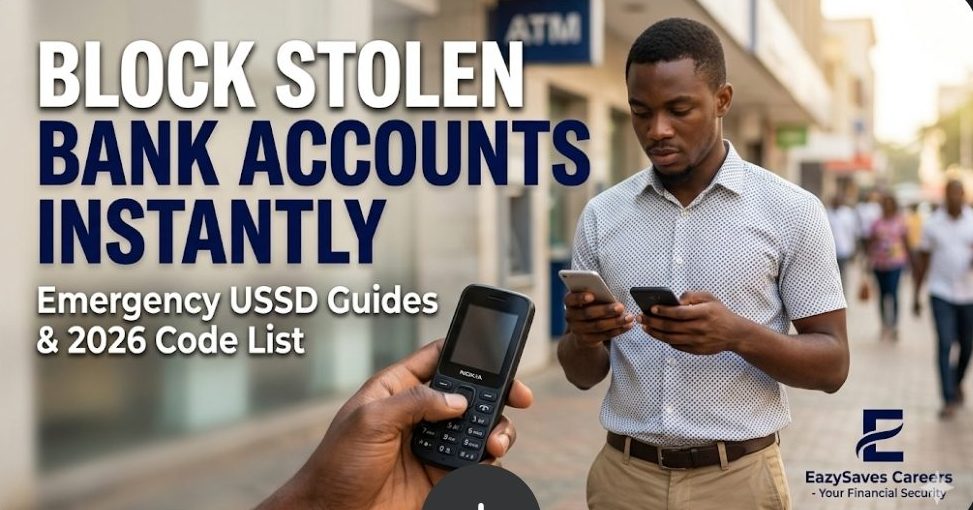
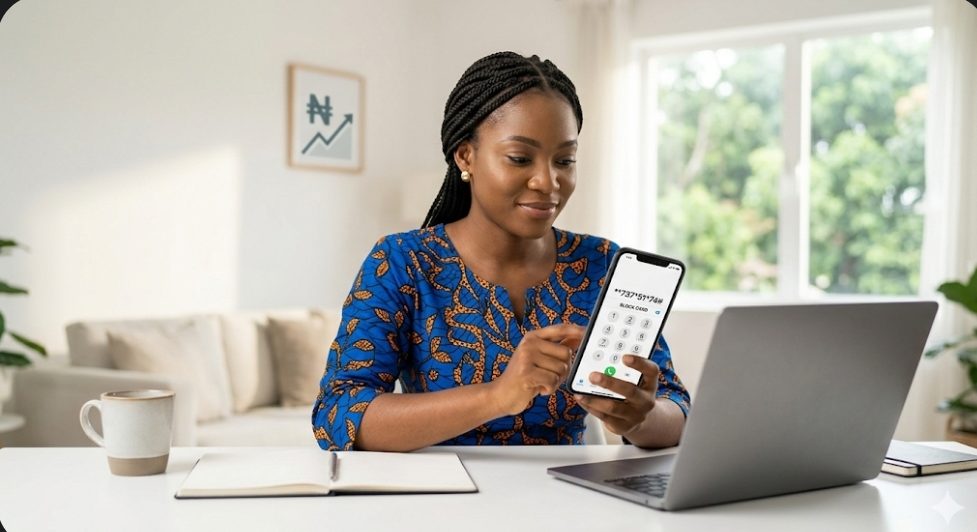
Updated USSD codes for hidden bank charges in Nigeria 2026. Learn how to stop unauthorized debits, block compromised cards, and apply expert tips to save your money. Everything you need know about this update is on the article below.
Updated USSD Codes for Hidden Bank Charges in Nigeria 2026
AS the current economy is now, achieving financial intelligence is no longer just about making more money; it is about protecting the money you have already earned.
For many Nigerian professionals, freelancers, and business owners, one of the most frustrating financial leakages comes in the form of unexplained bank deductions. You fund your account, and slowly, ₦50 here, ₦100 there, and ₦1,000 at the end of the month vanishes.
These constant deductions are often labeled as “hidden charges,” though in reality, they are usually automated fees for services you either do not need or forgot you subscribed to.
In 2026, relying solely on walking into a crowded banking hall to resolve a ₦50 deduction is a massive waste of your productive time. The modern solution lies right in the palm of your hand: your mobile phone’s USSD dialer.
In this guide, we will explore how to identify these deductions, how to use USSD commands to audit your account, and how to instantly block unauthorized transactions before they drain your hard-earned savings.
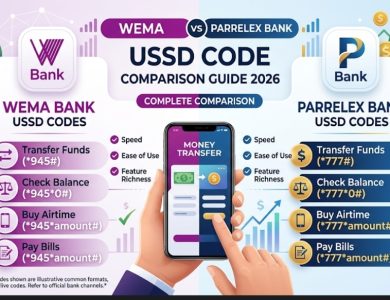
Read Also: Wema Bank & Parrelex Bank USSD Transfer Codes 2026: Complete Comparison Guide
About “Hidden” Bank Charges in Nigeria
Before we dive into the codes, we must clarify what these deductions actually are. Adhering to the Central Bank of Nigeria (CBN) guidelines, commercial banks are required to be transparent about their fees. However, because most customers do not read the fine print when opening an account, these charges feel “hidden.”
Here are the most common culprits eating into your balance:
- SMS Alert Fees: Banks charge you for every single text message they send regarding a transaction. If you are a business owner receiving multiple small transfers daily, these SMS fees can amount to thousands of Naira monthly.
- Card Maintenance Fees: Even if your ATM card is sitting in your drawer and you exclusively use transfers or USSD for payments, you are still billed a quarterly maintenance fee for that piece of plastic.
- USSD Session Fees: Every time you dial your bank’s USSD code to buy airtime or check your balance, your telecom provider (MTN, Airtel, Glo) charges a network session fee (usually around ₦6.98), which is deducted directly from your bank account.
- Value Added Services (VAS) & Auto-Renewals: These are the most dangerous. You might have mistakenly subscribed to a digital service, a mobile insurance plan, or a caller tune linked to your bank-funded airtime.
To stop the bleeding, you need to use the right USSD commands to either disable these services or block the channels through which they are deducted.
If your bank fails to reverse an unauthorized deduction within two weeks after you have logged a formal complaint, you have the regulatory right to escalate the issue directly to the Central Bank of Nigeria (CBN) Consumer Protection Department for a swift resolution.
The Updated USSD Codes for Hidden Bank Charges in Nigeria 2026
While banks do not have a magical “stop all charges” button, they do have specific USSD command strings that allow you to block compromised cards, stop unauthorized debit mandates, and audit your account via mini-statements. Here is the 2026 breakdown for Nigeria’s top financial institutions.
1. Guarantee Trust Bank (GTBank)
GTBank users frequently complain about accumulated SMS charges. While you must use the GTWorld app to switch your alerts from SMS to email, you can use USSD to immediately block your account or card if you notice rapid, unauthorized deductions.
- To check your balance (Audit): Dial *737*6*1#
- To instantly block your ATM Card (Stop fraudulent charges): Dial *737*51*74# using the phone number linked to your account.
- To block your entire account in an emergency: Dial *737*51*10# from any mobile phone (you will be prompted to enter the phone number linked to the account and your PIN).
2. Access Bank
Access Bank’s vast customer base makes it a frequent target for unsolicited third-party mandates. If you notice strange direct debits, your first step is an audit, followed by a block.
- To generate a Mini-Statement (Audit recent charges): Dial *901#, select the option for Account Enquiry, and choose Mini-Statement.
- To block your account instantly: Dial *901*911# from any phone. This stops all outward flows of cash, including hidden mandates, until you visit the branch to sanitize the account.
3. Zenith Bank
Zenith Bank offers robust USSD controls. If you are tracking down a missing ₦500, you don’t need to queue up at the customer service desk.
- To check balance: Dial *966*00#
- To block your account/stop all debits: Dial *966*911#. This command is a lifesaver if you suspect your card details have been compromised by an online subscription service that keeps charging you secretly.
4. United Bank for Africa (UBA)
UBA’s Magic Banking code is highly versatile.
- To check your mini-statement: Dial *919# and follow the on-screen prompts to view your last five transactions. This helps you immediately identify the name of the company or service deducting your money.
- To block a compromised debit card: Dial *919*10#. This stops all card maintenance and foreign exchange transaction charges if your card is stuck in a recurring billing loop.
5. First Bank of Nigeria
First Bank’s USSD architecture allows for quick interventions when you notice unauthorized deductions.
- To check your mini-statement: Dial *894#, select ‘Quick Banking’, and choose ‘Mini Statement’.
- To stop all transactions and block the account: Dial *894*911#.
6. Tier-1 FinTechs (Moniepoint, OPay, Kuda)
In 2026, many Nigerians have migrated their daily transactions to digital banks to avoid traditional banking charges. However, if you need to secure your digital funds via USSD (perhaps you lost your smartphone):
- OPay USSD Block: Dial *955# and follow the security prompts to freeze your account.
- Moniepoint USSD: Dial *5573# to manage your profile and secure your funds.
The “Hidden” Code Everyone Ignores: The NCC DND Code
Many people blame their banks for hidden charges when, in reality, the culprit is their telecommunications provider. When you link your bank account to your phone number for easy airtime recharge, telecom-based Value Added Services (VAS) like horoscopes, caller tunes, and daily news updates can silently drain your airtime. When your airtime finishes, some aggressive services might try to trigger a direct bank debit.
To permanently stop telecommunication companies from secretly deducting your money for services you did not request, you must activate the Nigerian Communications Commission (NCC) Do Not Disturb (DND) protocol.
- The Ultimate Fix: Dial *2442# on your MTN, Airtel, Glo, or 9Mobile line.
- Reply with “2442” or follow the prompt to select “Full DND.” This will instantly block all unsolicited promotional messages and silent premium subscriptions that eat your money.
Expert Tips: How to Permanently Stop Unwanted Deductions in 2026
Knowing the USSD codes is a reactive measure, it helps you stop the bleeding after it has started. As a financial intelligence strategy, you need to be proactive. Here are expert tips to optimize your bank accounts and achieve a “zero-deduction” banking lifestyle.
Expert Tip 1: The Email Alert Pivot
The single biggest legal drain on your bank account is the SMS alert fee. Banks charge roughly ₦4.00 per SMS. If you do 50 transactions a month, that is ₦200 gone. Over a year, that is ₦2,400.
- The Solution: Log into your bank’s mobile application (not USSD). Navigate to the “Settings” or “Service Request” menu. Look for the “Alert Preferences” option. Disable “SMS Alerts” entirely and leave only “Email Alerts” and “In-App Push Notifications” active. Email alerts are 100% free and much more detailed.
Expert Tip 2: The Two-Account Strategy (Fintech + Commercial)
Do not use a traditional commercial bank (like First Bank or GTBank) for your daily, low-value transactions. Traditional banks are heavily regulated with stamp duties and transfer charges.
- The Solution: Keep your main savings or salary in a traditional commercial bank. Do not request an ATM card for this account to avoid card maintenance fees. Then, open a Tier-1 Fintech account (like Moniepoint or OPay). Transfer your weekly “spending money” to the Fintech app in one bulk transaction. Fintechs offer free daily transfers and zero card maintenance fees, saving you thousands of Naira annually.
Expert Tip 3: Audit Your Online Card Mandates
When you use your Naira debit card to pay for Netflix, Apple Music, or Spotify, you give those companies a “standing mandate” to charge your card every month. Even if you delete the app, the charge will continue.
- The Solution: If you are seeing strange monthly deductions from international vendors, do not bother calling customer care, just block the card using your bank’s USSD code (e.g., *737*51*74# for GTB) and request a new one. A new card generates a new PAN (Primary Account Number), instantly breaking all hidden online subscription links.
Expert Tip 4: Avoid USSD for Heavy Banking
While USSD is great for emergencies (like blocking your account), it is terrible for daily banking. The ₦6.98 network fee charged per USSD session adds up incredibly fast.
If a transaction fails and you try three times, you have just lost over ₦20 without successfully sending any money. Always prioritize using your bank’s mobile app over Wi-Fi to eliminate session fees.
Conclusion
Taking control of your finances requires vigilance. The “Updated USSD Codes for Hidden Bank Charges in Nigeria 2026” are your first line of defense against unauthorized debits, compromised ATM cards, and aggressive third-party subscriptions.
By utilizing commands like *901*911# to secure your Access Bank account or *2442# to stop telecom deductions, you transition from being a passive consumer to an active manager of your wealth.
Please, share this content for others to benefit. For more information, drop your comment on the comment section below.
Thanks!

Iniobong is the Founders of EazySaves and a seasoned Career Consultant with over 4 years of experience in Virtual HR Management. Holding an M.A. and B.A. in Linguistics, Iniobong combines his deep understanding of structured communication with SEO expertise to provide Nigerians with clear, actionable advice on career growth and financial literacy. He is dedicated to helping young professionals navigate the digital economy with ease.
The co-founder is Anietie Asuquo